Showing posts with label mental wellbeing. Show all posts

Friday, 23 October 2015

Sorry, But I'm NOT Sorry That My Fat Body Offends You

fish2fishdating.com

"Stay fit and healthy, but most importantly be proud of the body that you wear".
                                                                               -  Susan            


Sorry, But I'm NOT Sorry That My Fat Body Offends You


Project your endless disappointments into the mirror, which is where I'm quite sure it all starts.

I'm one of those folks who has the "tendency." Meaning that somewhere beneath this sleek façade of semi-chubbiness, there's a true fatty waiting to let loose on the world, wobbles and all. 
Oh, there are many like me in the world, and life with us is all about fluctuation. Now, when I say fluctuation, you probably imagine I'm talking about gaining and losing pounds. But that's not what I mean.
What I really mean by fluctuation is that our sense of caring what we look like goes on and off. The kicker is that, the older we get, the less we care. 
This is where I have to get off the "we" thing and go right back to the singular "me" thing, as I don't want to get in trouble by pretending I know what anyone else on the planet does or thinks, especially when it comes to weight, eating, dieting, and self-image.
When you're a semi-to-full-on fatty, you bounce between being very sensitive on the subject of weight to being an iron wall of apathy. And when I'm in a particularly apathetic state of mind, I'm actually in a place of great self-esteem
That's the funny part. When I don't show drastic and obsessive concern for what my weight actually looks like to others, I'm at my happiest. 
Those are the moments when my own personal happiness conflicts with the judgments of those who aren't me, which constitutes every person on Earth, I suppose.
For example, I walked into my mother's house the other day after having not seen her in a year or so. After a round of affection, she, in her skinny-bodied way, says, "So, still on that diet?" (Cue trombone music for failure.) 
Clearly, I didn't have an answer for this, due to the fact that I'm shocked that my size still concerns her.
I could've said, "No. No more dieting," and heard the molecules of her disappointment start to gather into a barely hidden smirk. Or I could've said, "Yes," and watched those very same molecules gather into the same smirk. 
Either way, if I didn't manage to somehow turn into someone I've never been and never will be, I always merit the same response, which essentially says, "Your weight is disturbing my world."


Fish2FishDating.co.uk

So, I said, "Is my fat ruining your day again, Mom? Because I must tell you, if my fat has to go to war with your judgment, it's going to end in a stalemate, 'cause my fat isn't going away too soon. And from what I can see, neither is your judgment."
The weird thing is, by fat standards, I'm not even there. But I'm just chubby enough to inconvenience the lives of people like my mother.
She, a naturally slender beauty, could never quite accept me as a not naturally slender beauty. But it's not just her  there's a conveyor belt of disapproving people just waiting to tear ol' fatty down. At least my mom is honest about her disgust over my body. 
What makes me wail with laughter is when someone pulls the "I'm concerned for your health," routine. Oh god, please! What's the concern about? Is that how you make it OK to disapprove  by putting the stamp of concern on top of your inability to live and let live? 
Where do you go with that concern if I tell you I'm as healthy as a horse? Do you start praying for diabetes to kick in so you can finally say, "I told you so"?
Back off, man. This is what I'm working with.
I remember a time when I'd just given birth to my glorious and perfect baby girl. My little newborn was all snuggled on my chest and I was rocking her. It was summer and I was dressed in a cute little sun dress, reclining on a porch. 
My dad beamed at the baby and said to me, while looking at my legs, "But what are you going to do about those?" Those? You mean my legs? What should I DO about them? Cut them off? Trade them in? Rent new ones until I can afford a permanent pair of acceptable ones? WHAT?
And I remember thinking that all that I am, all I do, all I create, the good person I am, the talented artist I am, the BABY I just created  all of this takes a backseat to the fact that my legs aren't nice looking and my dad looks like he's going to puke at the sight of them. Wow.
I told this story to my mother the other day, during the "Are you still on that diet?" visit, and she stared at me in horror, as if she'd just heard the most disgusting thing she'd ever heard. I just looked at her in her pressurized innocence and internally giggled over just how blind people are to their own destructive behavior. 
How many times had I heard her call me "fat ass"? There isn't even a number that's high enough. Had she forgotten  or did she simply give herself over to a lie that had her believing she was always a staunch supporter of her daughter's less-than-perfect image?
My fat has been ruining people's days for decades now, most especially my parents. I always wonder what kind of person I would've turned out to be had I been told I was perfect "as is," instead of never physically good enough. 
Because the funny thing is, I've always loved myself, but I've never loved the way I look. 
I have a lovely working relationship with this ol' bod-o-mine. She's fabulous, this chubby chick I live inside. She got me through cancer and chemo; she got me through childbirth; her hands do these wonderful things with art, and her brain is just outstanding. She even looks good to some people. Not my parents, but some people.
And if I had the chance to do it all again with another body  a skinny body  I'd say no a thousand times and again. 
Because this body is the house in which I live and experience my wonderful and amazing life  only this body, not a skinny one, not a model body, not a body with great legs. Just my body.
At the end of my visit, my mother said to me, "You look good. Your skin is great, you look young." And I said, "Do you know why I look young or why my skin looks great? It's because I'm chubby! My skin is full and youthful because I'm at my correct weight. If I lost the kind of weight you wish I'd lose, I'd look like a bag of skin and wrinkles. My flesh would be hanging off me and I'd look like an ancient relic. I look good, Mom, because I'm fat."
I'm just a chubby girl. If it ruins your day, move along. Next window. My caring what you think is no longer relevant to my own happiness or self-esteem. 


Fish2FishDating.co.uk

Thursday, 3 September 2015

15 Signs You're In An Abusive Relationship


"It is hard for people who have never been a victim of an abusive relationship to understand why anyone in that kind of relationship wouldn't just walk away.What they don't understand is that breaking up can be more complicated than it seems. There are many reasons why both men and women stay in abusive relationships, emotional blackmail, financial, low self esteem to name but a few.
If you find yourself in the situation where a loved one or friend is in an abusive relationship it will not help for you go in guns blazing telling them to leave, get out, walk away etc. In reality they know what they should do, but until they are ready to make that step it will not happen.
The best way for you to help is to let them know that you are worried for them, don't place blame, shame or guilt upon them, be supportive and encourage them to talk to somebody who can help.

One point to make is that although this article comes from a female perspective 25% of victims in an abusive relationship are men."                                     - Susan Watts                                                                                                  


fish2fishdating.com


15 Signs You're In An Abusive Relationship


If you or someone you love identifies with these signs, it may be time to escape.


Women don't plan to enter into abusive relationships. In fact, many women who have escaped abusive relationships swear to themselves that they will never get into another one, just to find themselves in another one.

Sadly, it takes an average of five to seven acts of violence before a woman leaves her abuser. So, why not plan to not enter into an abusive relationship in the first place?

It may be easier to avoid an abusive relationship if you're able to detect the early signs.


Fish2FishDating.co.uk


The following list "15 Warning Signs of an Abusive Relationship" is distributed by The Women's Center to women seeking domestic violence counseling. A path to a safer, healthier and happier life often starts with a bit of knowledge. If your partner displays the following behaviors, you may be in an abusive relationship.

1. He pushes for quick involvement.  He comes on strong, claiming, "I've never felt loved like this before by anyone." You get pressured for an exclusive commitment almost immediately.

2. There is jealousy. Your partner is excessively possessive, calls constantly, or visits unexpectedly.

3. He is controlling. He interrogates you intensely about who you talked to and where you were; checks mileage on the car; keeps all the money or asks for receipts; insists you ask for permission to go anywhere or do anything.

4. He has very unrealistic expectations. He expects you to be the perfect person and meet their every need.

5. There is isolation. He tries to cut you off from family and friends; deprives you of a phone or car, or tries to prevent you from holding a job.

6. He blames others for his own mistakes. The boss, family, you - it's always someone else's fault if anything goes wrong.

7. He makes everyone else responsible for their feelings. The abuser says, "You make me angry" instead of "I'm angry." "I wouldn't get so pissed off if you wouldn't...

8. There is hypersensitivity. He Is easily insulted and will often rant and rave about injustices that are just part of life.

9. He is cruel to animals and children. He kills or punishes animals brutally. He also may expect children to do things beyond their ability, or tease them until they cry.

10. His "playful" use of force during sex. He enjoys throwing you down or holding you down against your will; he says they find the idea of rape exciting. Intimidates, manipulates, or forces you to engage in unwanted sex acts.

11. There is verbal abuse. He constantly criticizes you or says cruel things; degrades, curses, calls you ugly names. He will use vulnerable points about your past/life against you.

12. There are rigid gender roles. He Expects you to serve, obey, and remain at home.

13. He has sudden mood swings. He switches from loving to angry in a matter of minutes.

14. He has a past of battering. He admits to hitting women in the past, but states that they or the situation brought it on.

15. There are threats of violence. He makes statements such as, "I'll break your neck," but then dismisses it with "I really didn't mean it."

 If you need help, or protection, to get out or stay out of an abusive relationship, get in touch with your local (The) Women's Center, or search their main site at The Woman's Center.

For men who need help in an abusive relationship get in touch with Mankind Initiative


View original article here

Previous articles:


    Fish2FishDating.co.uk

    Thursday, 13 August 2015

    Exercise: Which Regimes Are Worth The Pain?


     Crossfit is a popular fitness regime, but it may come at a price. Photograph: MoMo Productions/Getty Images


    Exercise: Which Regimes Are Worth The Pain?

    From HIIT to pilates, swimming, running, ultramarathons and crossfit, there are scores of ways to get fit. But which will really make a difference?


    COLD-WATER SWIMMING


    The promise


    According to aficionados, it will boost your immune system, burn calories and leave you with an all-natural high.


    Does it deliver?


    There’s no doubt swimming boosts aerobic fitness, reduces fat and increases muscle. Add icy water though, and the risks may start to outweigh the benefits. “Immersion in cold water puts a significant strain on the heart, increases your blood pressure, and leads to uncontrollable hyperventilation that can be a precursor to drowning,” says Mike Tipton, professor of human and applied physiology at the University of Portsmouth, and a keen triathlete. This “cold water shock response” begins below 15C, and is responsible for most drownings in the UK (where the average water temperature is 10C) – most often, the shock of the cold causes people to inhale water, but it can also prompt heart attacks.


    Cold water swimming at Jesus Green Lido Cambridge.

    That’s not to say you can’t get used to the cold. “Provided you go about it sensibly, as few as five, five-minute immersions in cold water will reduce that shock response and the problems associated with it,” says Tipton. Anyone considering outdoor swimming should have health checks, be accompanied, and build up to longer swims at colder temperatures slowly.
    Going into cold water will give you a buzz and leave you feeling wide-awake, because it activates the fight or flight response and releases hormones such as adrenaline and cortisol. But is it better than regular swimming? The jury’s still out.

    Several studies have found cold water activates the immune system, but that isn’t necessarily the same thing as improving the immune system. Neither is it clear whether you’d get the same immune system boost by simply swimming in warmer water – this is something that Tipton’s team is currently investigating.

    Does it burn more calories? It depends on how fast you’re moving. If you’re sitting still in cold water and shivering, you’ll burn more than if you were on dry land, but who wants to put themselves through that? Once you get moving and stop shivering, any difference in the number of calories burned will be negligible, Tipton says.


    SPINNING


    The promise


    No gym is complete without its squadron of spinning bikes, often accompanied by pumping techno music and an instructor hollering at the class. Spinning, or group indoor cycling, promises to burn fat and boost strength and endurance as you power through virtual sprints, hill climbs and headwinds - all without having to actually go outdoors.


    Does it deliver?


    Generally, riding on a stationary bike isn’t as good as the real thing. One recent study found cyclists produced more power – and thus burnt more calories – for the same perceived effort, when they were outdoors.

    On the other hand, in a spinning class you get the added benefit of a coach pushing you harder than you might otherwise go cycling alone. “Outdoors can be quite strenuous, but it is more self-paced,” says Carl Foster, director of the human sports laboratory at the University of Wisconsin, La Crosse. “Face it, the instructors make their money motivating people, so spinning classes tend to be at the upper end of the intensity continuum.” In another study, Foster’s team found spinning class participants regularly exceeded their maximum aerobic capacity for short periods – so were working very hard. Spinning should make you fitter and burn lots of calories – just beware your appetite will also increase as a result.


    PILATES


    The promise


    Pilates combines elements of yoga and martial arts training into a predominantly mat-based routine that it’s claimed boosts strength, flexibility and posture. Celebrities, including Madonna and Jennifer Aniston, swear by its body-sculpting powers, but pilates is also recommended for those with back pain to strengthening muscles that support the spine.


    Pilates: loved by celebrities. Photograph: Eliza Snow/Getty Images

    Does it deliver?


    A key claim is that it activates and strengthens “core” abdominal muscles, which is probably true. In a recent study, Duncan Critchley at Kings College, London and his colleagues divided a group of regular gym users into two groups – one group did two 45-minute sessions of pilates a week for eight weeks; the other did conventional weight training – and then compared their abdominal muscles. “Those who had done pilates training were using their deepest tummy muscles more than those who had done the strength training,” says Critchley. In another study, he looked at the effect of pilates on those with lower back pain, and found that while most reported feeling better after a pilates course, this didn’t necessarily correlEven so, pilates probably will make you stronger. Another recent study showed that a twice-weekly class led to significant increases in the endurance of muscles in the abdomen and upper body, although it detected no improvements in posture or balance.


    HIIT


    The promise


    If you want to get fit, but never have time, then HIIT (high intensity interval training) might seem the perfect solution. The idea is to alternate very short (30 second) bursts of extremely intense aerobic exercise with slower recovery periods. This is claimed to produce the same benefits as more conventional aerobic exercise (such as running or cycling) for far longer.

    One idea is that HIIT is better at depleting the glycogen – or sugar stores – in your muscles, than regular exercise. “If you start breaking down this glycogen on a regular basis, the theory is your muscles will get better at taking glucose up from the bloodstream, and this could reduce your risk of diabetes,” says Niels Vollaard, an exercise physiologist at the University of Bath.


    Does it deliver?


    Vollaard’s team found that interspersing 10 minutes of easy peddling on a stationary bike with two “all-out” 20-second sprints can achieve the same health benefits as a 45-minute run or cycle ride. Even better, this seems to suppress appetite, unlike more conventional exercise which makes you hungrier.

    The drawback? For now at least, most gym bikes and treadmills are geared towards general aerobic exercise, rather than sprint training. And although many gyms claim to offer HIIT classes, what they often mean is interval training which, although hard work, is unlikely to recreate the extremely high intensities of the HIIT research taking place in sports science labs.

    To do this, you need to find a static bike that lets you switch the resistance from really low, to really high, extremely quickly. Alternatively, look for a steep hill – ideally with a downward slope immediately before it. The key is to get your legs moving as quickly as possible before you hit the sudden increase in intensity – and then you need to keep on peddling as hard as you can for another 20 seconds. Runners could also try the same thing on foot.

    Because of the strain HIIT puts on your heart, Vollaard recommends consulting your doctor before starting any kind of high intensity exercise.


    CROSSFIT


    The promise


    “There is the pain that hurts you, and then there’s the pain that changes you”. It’s a mantra beloved of crossfitters who believe that to get results you need to push yourself hard; very hard. Crossfit uses constantly varied, high-intensity, functional movements – the sort we use in everyday life to sit down at a chair or lift a bag off the floor – to get results. In crossfit, the loads you bear are far heavier, and they’re performed in a competitive environment where you’re encouraged to push yourself harder each week – often with little rest in between.ate with how well their core abdominal muscles were working.


    Does it deliver?


    Recent research suggests crossfit delivers impressive results. When Steven Devor and his colleagues at Ohio State University assigned 54 men and women to a five-day-a-week crossfit programme for ten weeks, they saw big improvements in participants’ aerobic capacity (a marker of general fitness), a 3-4% fall in fat and increases in muscle, regardless of initial level of fitness. “Crossfit generally produces improved results when in body composition and measurements of aerobic fitness compared to traditional weight lifting or aerobic exercise,” says Devor – mainly because you are constantly working at a high intensity, with few rests in between sets, he says. However, this may come at a cost. In Devor’s study, nine of the participants dropped out because of injury.


    MARATHONS AND BEYOND


    The promise


    Running is now second in popularity to swimming in the UK, with booming numbers signing up for half-marathons and marathons. This is prompting some to seek even bigger challenges, like ultra-marathons or iron man triathlons. Those who compete in such events tend to be extremely lean and fit, but is running – particularly for long distances – really the best form of exercise?


    Does it deliver?


    It depends on what you want to achieve. “If you just want to improve your health and to feel a bit better, then regularly running five to 10km is great,” says Niels Vollaard, an exercise physiologist at the University of Bath. “If you want to build slightly bigger muscles and look a bit more trimmed then you probably want to do a bit of weight training as well.” This is because although running will make your muscles fitter, it won’t usually make them grow any bigger. Your goals will also influence how hard you need to push yourself on each run. If you’re just running for general health and wellbeing, then continuing to run the same distance at the same intensity will continue to burn off excess calories and reduce your risk of disease. But if you want to get even fitter, or improve your time or distance, you will need push yourself harder – either running longer distances, or incorporating some interval training.


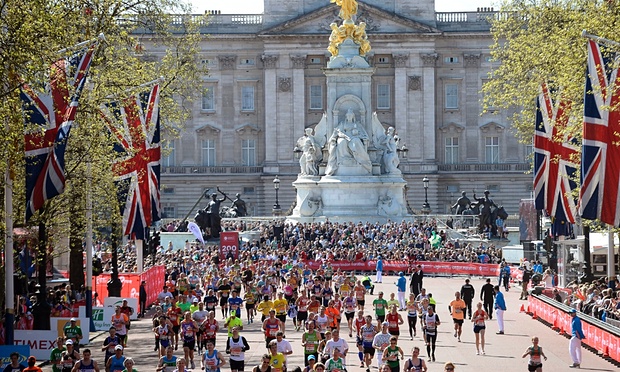
     This year’s London marathon.

    However, regularly running longer distances than 10K can have a negative impact on your health. “Training for a marathon is a real challenge for your joints, tendons and cartilage, and so we tend to see regular distance runners developing problems with their knees, hips and shins,” says Vollaard. “Your muscles are happy to keep on adapting and getting better, but the rest of your body will struggle.” And although runners generally have healthier hearts than people who don’t exercise, emerging evidence suggests that constantly training for, and competing in, extreme endurance events such as marathons, ultra-marathons, iron man triathlons, and very long-distance bicycle races, might damage the heart and blood vessels.


    Before considering any exercise regime, always consult your GP. Never undertake any form of exercise that may be strenuous, unusual or intense without taking medical advice.


    View original article here


    Relevant articles:

    8 WAYS THE GYM CAN IMPROVE YOUR SEX LIFE
    Bizarre Side Effects of Exercise


    Previous articles:


    Fish2FishDating.co.uk

    Tuesday, 28 July 2015

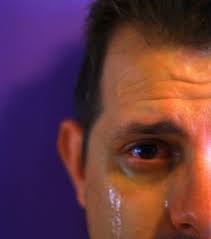
    This Is What It Means...When Guys Cry


    This Is What It Means...When Guys Cry


    You can tell a lot about a dude — from his relationship MO to his sex skills — by his tear-shedding style.


    He Cries, But Not in Front of You


    Closet sobbers have been taught that boys shouldn't cry. "This often leads to the suppression of other emotions — even happy ones, such as love — in your presence too," says William July, PhD, author of Understanding the Tin Man. "The feelings he might think are most acceptable to show are anger and sexual arousal." Though sensitive at his core, he needs your support and compassion to begin thawing on the outside. If you notice he's quieter than usual, ask him if something's wrong at work. Even if that's not the problem, he'll be more inclined to reveal what's upsetting him if you open the door. It won't happen overnight, but as trust increases,so should his expressions of emotion. Deep down, this guy has a need to impress, which is why he doesn't like to reveal any chinks in his armor. Your job is to make it clear that tenderness is one of the qualities you prize in a guy.


    He's Always Stoic


    This may come as a surprise, but a man who's not in touch with his feelings will always put yours first. "Because he wants to come off as tough and manly, his primary concern will be protecting you and making sure you're secure," says Scott Kudia, PhD, author of If This Is Love, Why Am I Unhappy? And since this guy is so uncomfortable with displaying his emotions, there won't be much drama, meaning he'll handle most problems calmly.

    The drawback is that he may have trouble showing depth of emotion — verbally and physically. "Encourage him to slow down during intimate times — like in bed," says Kudia. "Tell him you think it's sexy when a guy lets down his guard." If he feels that his alpha-male standing won't be compromised, he may loosen up a bit, but he's never going to walk around with a hankie in his pocket.


    He Bawls Out of Frustration


    When things don't go his way, this guy responds by having a mini meltdown. "Don't mistake his tears for sensitivity though," warns psychologist George Weinberg, PhD, author of Why Men Won't Commit. "He just never learned to express himself any other way, so he deals by crying, which is how the body purges toxic emotions. And when it comes to sex, he needs reassurance." 

    The best way to handle him: Ignore his freak-outs, but acknowledge his feelings, and couch your sexual desires as compliments. Lastly, you may suggest he see a counselor for new, healthier ways to cope.


    He's Not Shy About Shedding Tears


    If your guy is the type to get watery-eyed during very emotional situations — or even during the occasional sappy moment (read: while watching a sad movie) — you have a keeper. "This is a well- balanced man who is  secure enough in his masculinity to be emotional," explains Kudia. "He is likely to be a good communicator and has no problem letting you know how he feels, either with words or displays of affection." Because he's in touch with his own emotions, this guy will probably be able to better intuit yours. For example, if you want him to take the next step in the relationship or switch up the bedroom routine, he'll sense it. And if he doesn't, a subtle suggestion is all it will take to effect change since pleasing you is a major motivator for him.


    Read original article here


    Previous articles:


    Fish2FishDating.co.uk

    Thursday, 16 July 2015

    Your Mental Health

    Image result for happy people


    Your Mental Health


    Good mental health is one of the most important aspects of general wellbeing. It should not be ignored or thought of as a taboo subject. At some point in life most people will face a challenge with their mental health and it is important to have the right information and tools to help deal with these, whether it be stress, anxiety, depression, a pre-existing problem, a medical condition, grief or family disruption. This is an overview of the most common conditions affecting mental wellbeing.


     Tips for good mental wellbeing

    • Learn how to minimise and manage stress and anxiety.
    • Talk about feelings. Don’t be afraid to admit something is wrong.
    • Know where help and support is available.
    • Notice signs and symptoms early.

    How do hormones fit in?

    Hormones have an effect on all women’s lives. They influence all aspects of life from puberty, pregnancy and birth to the menopause. Hormones are thought to have a role in PMS (pre-menstrual syndrome). Also the change in levels of hormones as women get older due to the menopause can also affect the way women feel about life and influence mood and emotion.

    Stress and anxiety

    Image result for talking to doctors about depression


    Stress and anxiety are often interlinked and two of the most common factors affecting mental health. It is important to be aware of how to manage these if they occur. Left unresolved they can lead to further problems and possibly depression.
    Anxiety is a described as a general feeling of unease. Stress is described as the body’s response to events or demands that cause tension, concern and in some cases anxiety. It is normal to feel anxious or stressed from time to time especially if faced with a stressful or frightening situation. However, if this lasts for a long period of time and interferes with ‘normal’ life then this is considered as severe.

    Symptoms of stress and anxiety:
    • Lack of concentration
    • Change in appetite
    • Sleeping problems (insomnia)
    • Loose stools or diarrhoea
    • Dry mouth
    • Palpitations or fast heart rate
    • Shortness of breath
    • Difficulty swallowing
    • Shaking
    • Headaches or muscle pain
    • Feeling irritable or angry
    • A feeling of being out of control or being detached from surroundings
    • Feeling anxious about everyday tasks or functions and needing to control these
    • Dependence on alcohol, drugs or any other substances or actions in order to function
    • Lack of libido- sex drive

    Tips for self help and treatment
    • Identify the cause. By doing this strategies can be put in place to try and reduce and manage the stress or anxiety.
    • Talk about it. Sharing these feelings can often help
    • Try and make changes
    • Excercise regularly
    • Make time for sleep and relaxation
    • Have a regular balanced diet
    • Minimise caffeine, drugs, cigarettes and alcohol
    • Try and have time away from the trigger

    Seek help from a GP or healthcare professional who can assess and offer advice and will refer on to a specialist for counselling and management tips if needed. In certain circumstances medication maybe also be considered.

    Depression


    Depression can be devastating for women and their families it is a genuine illness, but with the right support and treatment most people make a full recovery. More women suffer than many people imagine. It is more than just a feeling of being sad for a few days. It is a persistent feeling for weeks or months, even years. There can be many triggers such as: severe stress and anxiety, grief, relationship difficulty, illness or a significant change in circumstance. One of the most common life events that can trigger it in women is pregnancy and birth.

    Symptoms of any type of depression can include:

    • Persistently low mood
    • Sadness
    • Feeling of inadequacy
    • Feeling in a ‘dark’ mood
    • Feeling alone
    • Guilt
    • Lack of energy/fatigue
    • Insomnia- not sleeping
    • Change in appetite
    • Weight loss/gain
    • Reduced ability to concentrate
    • Anxiety- feeling anxious
    • Irritability
    • Loss of connection with society or family
    • Anger
    • Suicidal thoughts


    Tips for Self-help and treatment


    • Exercise regularly
    • Make time for sleep and relaxation
    • Have a regular balanced diet
    • Minimise caffeine, drugs, cigarettes and alcohol
    • Family/friend support- if possible, try to engage socially with an extended network
    • Think about a new hobby or activity
    • Talking about feelings to a partner, family or friends
    • Cut out or minimise caffeine, drugs, cigarettes and alcohol

    Seek help from a GP or healthcare professional who can assess and offer advice and refer on to a specialist for counselling and management tips. If needed, medication maybe considered.


    Image result for happy women


    Other mental health conditions


    There are many more mental health conditions that can affect women like Bi-polar disorder and schizophrenia. These are also more common than many people imagine and there are many misconceptions about these conditions. With the correct treatment and support many people with these conditions can live stable lives. 


    Previous articles:


    Fish2FishDating.co.uk